
How to Get Google AdSense Approval in 2026 – WordPress Blogger Website
Web Development Insights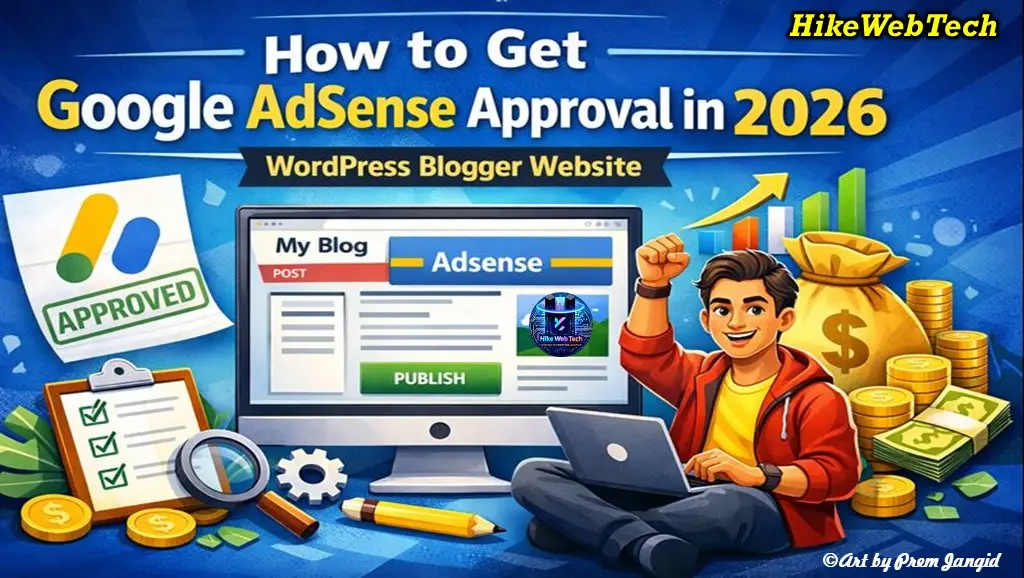
Getting Google AdSense approval in 2026 has become more challenging than ever. With Google prioritizing high-quality, original content, mobile-friendly websites, and publisher transparency, simply creating a blog is no longer enough. Many aspiring bloggers make the mistake of focusing only on content quantity or design, ignoring Google’s strict policy and UX standards.
At HikeWebSolutions, we have analyzed hundreds of AdSense approvals and rejections. Our research shows that platform choice (WordPress vs Blogger) does not guarantee approval. What matters most is content quality, proper legal pages, mobile optimization, and a trustworthy site structure. In this guide, we will cover every aspect you need to consider to maximize your chances of approval in 2026, including a step-by-step checklist, common rejection reasons, and FAQs.
What Is Google AdSense and Why It Still Matters in 2026
Google AdSense is an advertising network that allows website owners to monetize their content by displaying ads. Advertisers pay Google, and Google shares a portion of that revenue with publishers.
Despite the rise of alternative monetization methods, AdSense remains popular because it is beginner-friendly, easy to integrate, and globally reliable. You don’t need to negotiate with advertisers, and ad formats are automatically optimized for your users.
However, Google only approves websites that meet its strict quality and policy standards, which include original content, legal compliance, and mobile optimization. Publishers must also demonstrate transparency, trustworthiness, and value for users. For official policies, you can refer to Google AdSense Program Policies.
What’s New in Google AdSense Policy 2026 Updates
Google’s latest updates focus on quality, originality, and publisher transparency. Rejection rates are high for websites that do not comply with these rules.
1. Original, Helpful Content Is Mandatory
Google evaluates content based on whether it solves real user problems, provides clear explanations, and is written for humans, not search engines. Thin content, rewritten articles, or keyword-stuffed posts are often rejected.
The key is to focus on creating in-depth, valuable content. Each article should ideally be 800–1500+ words, include headings, subheadings, images, and examples that help readers. Remember, quality outweighs quantity, and even a 20–30 article website can get approved if content is well-crafted.
2. AI-Generated Content Is Closely Monitored
While AI tools like ChatGPT can assist in research, Google explicitly warns against low-value AI content. Websites with repetitive, generic, or unedited AI articles are likely to get rejected.
The best approach is to use AI for outlines or initial drafts and then edit heavily, adding personal experience, examples, and insights. This ensures your content reads naturally and meets Google’s originality standards.
3. Publisher Transparency & Identity Verification
Google now places high importance on publisher accountability. Every site must have:
-
Real About Us information explaining the website and team
-
Valid contact details
-
Ownership of the domain and content
These measures are designed to reduce spam and enhance user trust. For guidance, check AdSense Help Center.
4. Low-Value Pages & Thin Affiliate Content
Pages that only contain affiliate links, redirects, or minimal text are considered low-value. Google requires that every page provides meaningful, standalone content.
Thin pages, doorway pages, or tag-only pages without content can result in automatic rejection. Focus on creating informative, well-structured posts that serve your audience.
5. Mobile-First & User Experience Priority
Google evaluates websites primarily from a mobile perspective. Websites with non-responsive layouts, slow loading speed, or intrusive popups are often rejected.
Optimizing for mobile includes:
-
Responsive themes
-
Readable fonts
-
Easy-to-click buttons
-
Fast-loading pages
For technical guidance, see Google’s Mobile-Friendly Test.
WordPress vs Blogger for AdSense Approval in 2026
Choosing the right platform affects your ease of implementation, SEO, and approval speed. Both WordPress and Blogger can be approved, but practical differences exist.
Comparison Table
| Feature | WordPress (Self-Hosted) | Blogger (Blogspot) |
|---|---|---|
| Ownership Control | Full control | Limited |
| Custom Domain | Required & recommended | Strongly recommended |
| SEO Optimization | Plugins like RankMath, Yoast | Limited manual control |
| Design Flexibility | High | Limited |
| AdSense Integration | Easy | Very easy |
| Approval Consistency | High | Medium |
HikeWebSolutions Insight:
Blogger sites on free subdomains face higher scrutiny. Using a custom domain increases approval chances significantly. For more details, visit TechCosec on Blogger Domains.
Minimum Content Requirements for AdSense Approval (2026)
Google does not provide a fixed number of articles, but analysis shows:
-
20–30 high-quality posts
-
Each post 800–1500+ words
-
Focused niche
-
Proper headings, lists, and images
High-quality content means original text, copyright-free images, examples, and clear structure. Avoid copying, spinning, or keyword-stuffing.
Mandatory Pages for Google AdSense Approval
These pages are essential for trust and compliance:
1. About Us Page
Include your story, expertise, and the value your website provides. Avoid generic or copied templates.
2. Contact Us Page
Provide an email, contact form, or social media links to show real human interaction.
3. Privacy Policy Page
Explain how your site uses cookies, Google AdSense ads, and collects user data. For reference: Google Privacy Guidelines.
4. Disclaimer / Terms of Use
Necessary if you use affiliate links or give advice (financial, health, tech).
Mobile-Friendliness & Page Speed
Mobile optimization is critical in 2026.
-
Use responsive WordPress themes
-
Optimize images with plugins like Smush or ShortPixel
-
Enable caching (WP Rocket, W3 Total Cache)
-
Minimize popups and auto-play media
Core Web Vitals Targets
| Metric | Recommended |
|---|---|
| LCP | < 2.5s |
| CLS | < 0.1 |
| INP | < 200ms |
Traffic Requirements: Myth vs Reality
Officially, Google does not require a minimum traffic number. However, indexed pages and organic visitors help demonstrate site legitimacy. Even 10–50 organic daily visitors can suffice if content quality and site trust are strong.
Common Reasons for AdSense Rejection in 2026
| Reason | Explanation |
|---|---|
| Low-value content | Thin, generic, or AI-only posts |
| Missing legal pages | Privacy Policy, About, Contact missing |
| Copyright issues | Copied images or text |
| Poor mobile UX | Slow pages, intrusive popups |
| Unclear niche | Random topics or mixed content |
Final AdSense Approval Checklist (2026)
Ensure your site has original articles, a clear niche, required legal pages, mobile-friendly design, fast loading speed, a custom domain, no prohibited content, and Google Search Console integration.
| Requirement | Status |
|---|---|
| 20+ original articles | ✅ |
| Clear niche | ✅ |
| About, Contact, Privacy pages | ✅ |
| Mobile-friendly design | ✅ |
| Fast loading speed | ✅ |
| Custom domain | ✅ |
| No prohibited content | ✅ |
| Search Console connected | ✅ |
How to Apply for Google AdSense (Step-by-Step)
Visit the Google AdSense website, sign in with your Google account, add your website URL, complete site verification, and submit your site for review. Approval usually takes one to fourteen days.
-
Sign in with your Google account
-
Add your website URL
-
Verify site ownership
-
Submit for review
Approval usually takes 1–14 days.
What to Do If Your AdSense Application Is Rejected
Rejection is common and fixable. Carefully read the rejection email, identify the issue, improve content or user experience, and reapply after fifteen to thirty days. Many sites are approved on the second or third attempt.
If rejected:
-
Carefully read the rejection email
-
Identify issues (content, UX, legal pages)
-
Improve the website
-
Reapply after 15–30 days
Many publishers get approved on the second or third attempt once improvements are made.
Frequently Asked Questions (FAQs)
1. Is WordPress better than Blogger for AdSense in 2026?
WordPress offers more control and flexibility. Blogger can still be approved if you use a custom domain and high-quality content.
2. Can I use AI content and still get AdSense approval?
Yes, but it must be heavily edited, original, and valuable. Pure AI content is risky.
3. How old should my website be before applying?
No fixed age. 1–3 months with consistent content is ideal.
4. Do I need traffic before applying?
No, but organic traffic improves credibility.
5. Can free Blogspot domains get approved?
Yes, but custom domains increase approval chances.
Conclusion
In 2026, Google AdSense approval is all about building a real, trustworthy, user-focused website. Success depends on:
-
High-quality original content
-
Transparency and legal compliance
-
Mobile-friendly design
-
Adherence to Google’s updated policies
At HikeWebSolutions, we consistently see that websites built for users, not just monetization, get approved faster and grow sustainably.









Leave Message